How a week of STEM activities, mentorship, and imagination sparked new possibilities and new dreams
Chloe Sferra
KKOOM Volunteer
5월 11, 2025
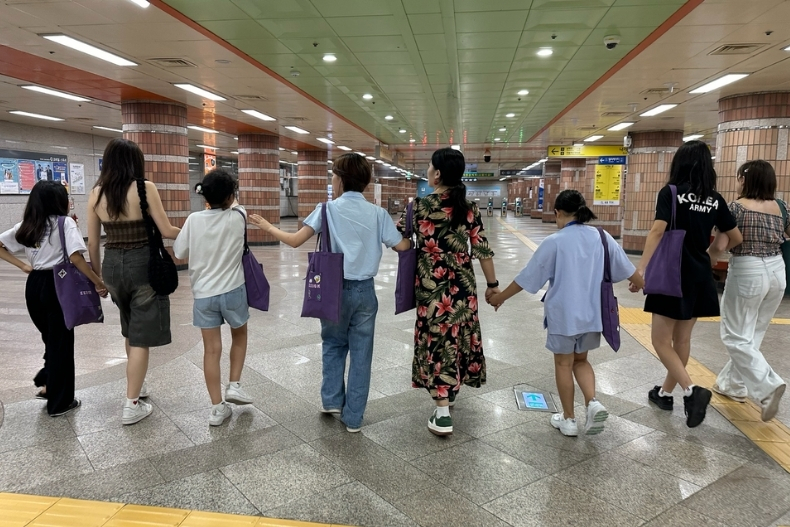
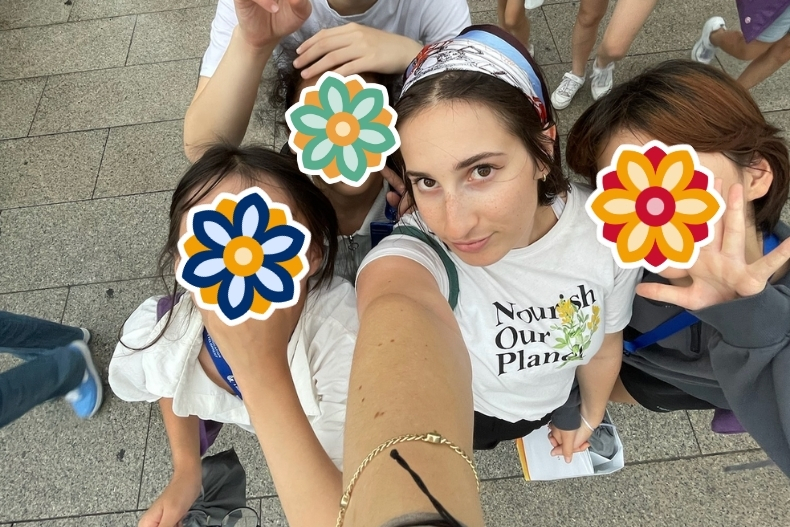
Chloe and some of the campers walking between activities in Seoul.
Early Dreams and Realities
In Kindergarten, my teacher hosted a “career day” where my fellow students and I could dress up as any career we wanted. There were astronauts, doctors, farmers, movie stars, singers–all jobs that might interest a five-year-old.
I’m not sure how many of my classmates ended up becoming the careers they dressed up as that day, or how many different ones they went on to consider in the next ten years of their life. Personally, I went dressed as a teacher and switched to “actress” by second grade. Whatever we chose didn’t matter. The point of career day was to show us all at a young age what we could become.
My classmates and I would grow up believing the sky was the limit for us and nothing was out of reach. This is not an experience that all children get. This past summer, spending extended time with children in one of South Korea’s social welfare homes, made that clear.
Whatever we chose didn’t matter. The point of career day was to show us all at a young age what we could become. My classmates and I would grow up believing the sky was the limit for us and nothing was out of reach. This is not an experience that all children get. This past summer, spending extended time with children in one of South Korea’s social welfare homes, made that clear.
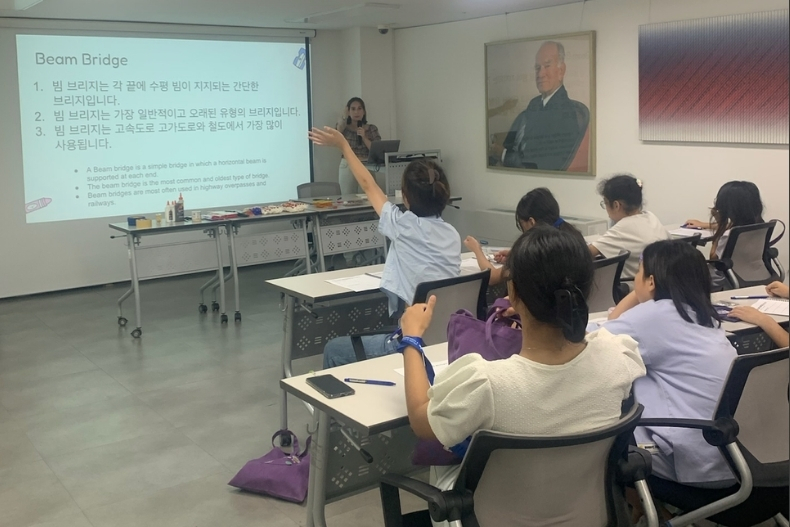
Chloe teaches a lesson about physics, bridge structure, and mass to the students.
Dreams Children Don’t Feel Allowed to Have
When Allie Easterbook and I first applied for a Citizen Diplomacy Action Fund grant, we had high hopes for “changing lives” through our women-in-STEM themed summer camp. I had visions of the girls discovering they were meant to be scientists and dedicating themselves to studying math so they could achieve their newfound dream.
What we discovered, instead, was that having a dream was something the girls didn’t afford themselves. A dream, for many of South Korea’s children in social welfare homes, was a set up for disappointment.
When asked what they wanted to be when they grew up, girls responded with “part-time worker” or “convenience store employee.” It’s not difficult to understand their reason for these answers. If a child wants to be a soccer player, one needs to buy them cleats and a ball. Someone should enroll them in extra soccer training. Someone needs to root for them on the sidelines. Without that exposure, the realm of soccer feels out of reach.
You can replace “soccer” with any interest a kid might have and the point remains: it is imperative for young kids, particularly girls, to know what they are allowed to dream.
“I had visions of the girls discovering they were meant to be scientists and dedicating themselves to studying math so they could achieve their newfound dream. What we discovered, instead, was that having a dream was something the girls couldn’t afford themselves.”
Chloe | KKOOM Volunteer
Shifting Our Approach
Once the chaperone team realized the girls in our camp were going to need more than just a few days to discover a life-long passion for science, we switched our goal for the program to focus on convincing the girls that STEM wasn’t something out of reach.
We went to the Gwacheon Science Museum to see the planetarium and the expanse of space; we raced to complete a scavenger hunt at the Coex Aquarium; and we discovered the future of artificial intelligence at the SK T.um Center. With each fish that swam by and virtual headset worn, we started to see the spark in our campers grow.
Small Moments of Breakthrough
One night, after a day of visiting women in STEM entrepreneurships, the girls started to play “business” and were assigning each other roles such as CEO, intern, and office worker. In their reflection packets, the girls wrote down the names of the female scientists and entrepreneurs they met as people that they admired. When asked if they were more interested in science after the week, they all said yes. These felt like wins.
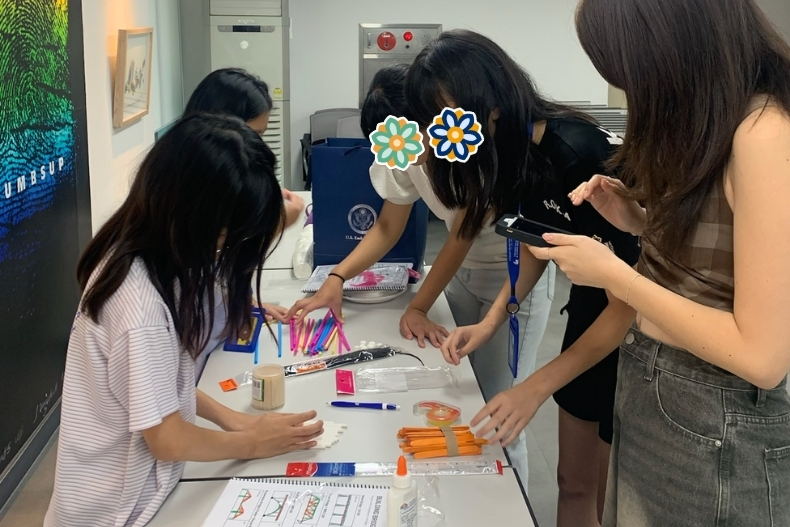
A group of the students work as a team and use what they learned about bridges to build a strong bridge model.
Looking Back: Two Moments that Mattered Most
It has now been several months since the camp concluded and as I think about what might be next for these girls, I reflect on two important moments.
1. A Chaperone’s Reflection
The first moment is when one of the chaperones, a young Korean man who had grown up in the same social welfare house, commented on how he wished he had a program like this one when he was younger. He shared his story about how nice it would have been to attend a camp similar to ours when he was a student.
He said that while the girls may not realize it right now, the exposure to STEM that this camp has provided will positively impact them in the future. That story meant a lot to Allie and I.
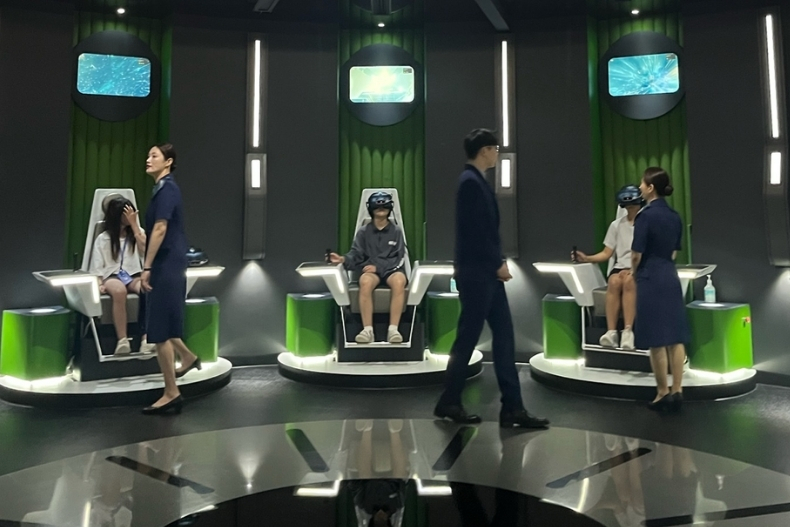
The students visited the SK T.um center where they could try cutting edge technology, including a new virtual reality headset.
2. A Visit That Showed the Impact
The second moment of importance was when I got to visit the girls at their home a few days after the camp had ended. I spent the evening playing with them, eating dinner, and getting a glimpse of their normal day-to-day life.
They ran around their houses heading to and from taekwondo or dance or archery classes. They played on their tablets and worked on art projects. They completed their homework and showed me pictures they had hung up.
One of the girls brought me over to her desk to show me the new decorations she added. There was the ticket stub to the science museum pinned up behind a photo booth picture we had taken. Her camp journal was stacked in between her favorite books and on the desk was a pile of drawings, one of which was a girl smiling in a lab coat.
A group of campers and chaperones link hands as they head to the science museum.